

Gaps form an important part of price action. They vary in rarity from market to market. For example, in the currency market they usually occur at the open after the weekend or whenever there is a major announcement, and in stocks, gaps from one day to the next are quite common. A gap is a gap, and gap trading is a fairly simple breakout and breakdown strategy, and with the right indicator on the screen, such as a volume profile or bars, is really easy to identify and execute.
Introduction to gaps
A gap occurs between prices when the market is trading at $100 and then suddenly trades at $102 without a quote at $101. In such a case, a gap is formed. This can be seen in charts where there seems to be a chunk missing between candles. Take a look at the GBPUSD chart below and notice the empty grey space between the candles.Two filled gaps on the GBPUSD 3h data.
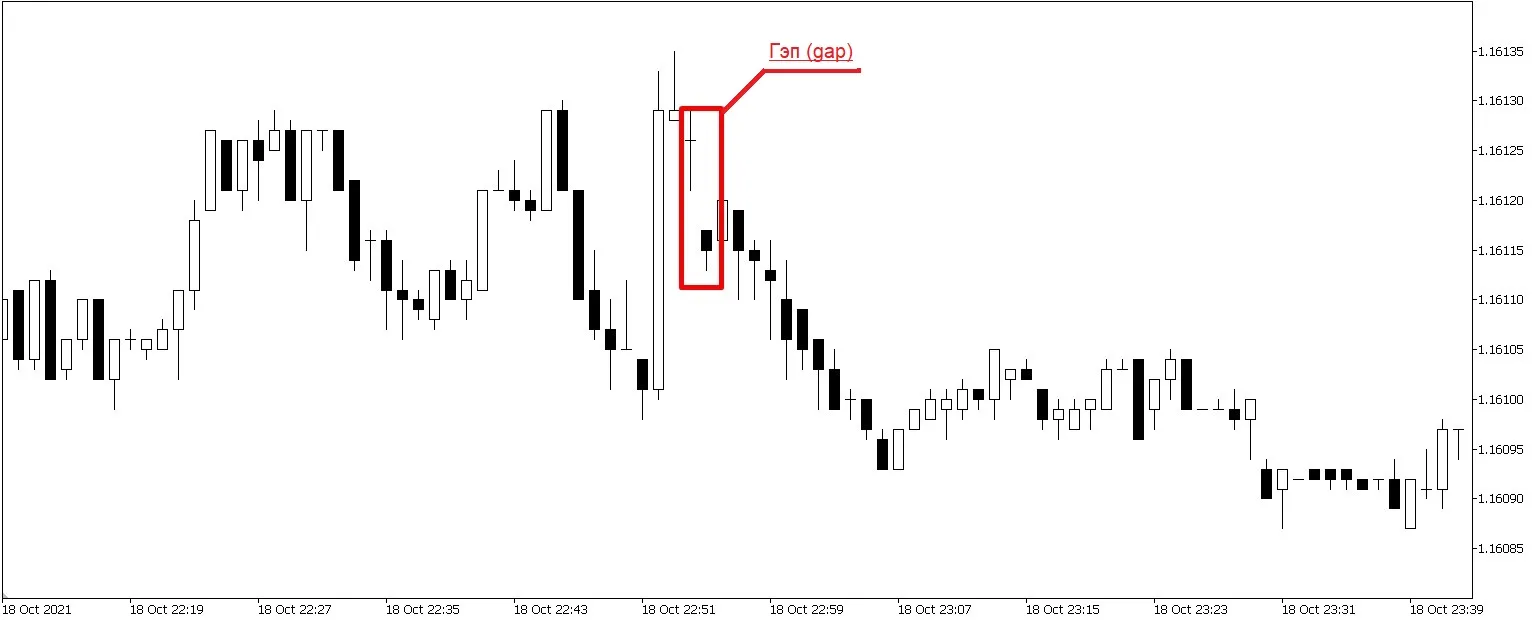
Gaps can occur for fundamental and technical reasons, but we are most interested in identifying and trading them. In the currency market, the visible gaps are those that occur over the weekend. Since it trades all day 5 days a week, perceived gaps are likely to look like giant candles, but since we can’t know for sure, we’ll stick to the general definition of gaps.
Gap types
There are different types of clearances and it can be quite difficult to tell the difference:
- Normal gap: usually occurs in sideways markets. It is most likely to be filled due to market dynamics returning to the mean.
- Breakaway gap: it usually resembles a normal gap, but the gap occurs above chart resistance or below chart support. It signals the acceleration of a new trend.
- Slippery gap: it usually occurs within a trend, but more of it confirms it, hence it is a continuation pattern.
- Exhaustion Gap: usually occurs at the end of a trend and close to a support or resistance level. It is a reversal pattern.
How to make up the gaps?
So now that you know the gap is a gap tell us how to fill in the gaps, it is required on our part that we observe this particular method. So please read the disclaimer before moving forward. First of all, pick stocks, filter out stocks that have more liquidity and volatility than their peers. You check the volatility on the NSE website and look closely at the stocks traded based on their volume. Stocks that are trading on higher volume than their counterparts may have a very good chance of opening at a higher high than the previous day’s close.