
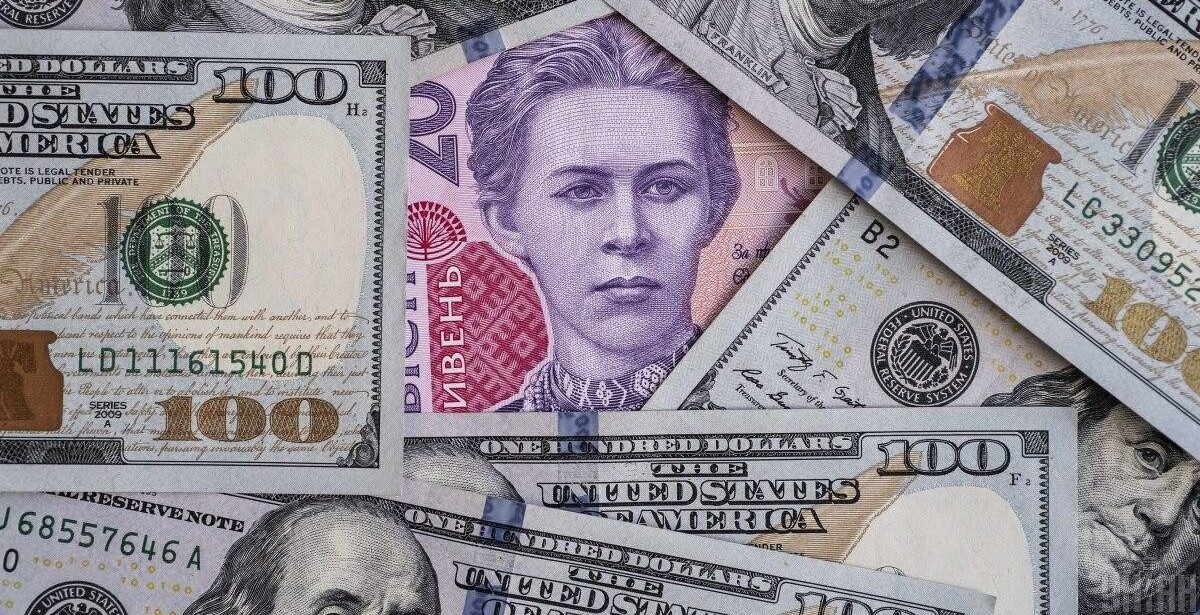
The country’s economy, purchasing power, and personal finances are affected by two key processes: currency devaluation and revaluation. They can lead to price increases, lower incomes in foreign currency equivalent, or vice versa: create favorable conditions for savings. We offer you to learn more about these processes, as well as to get acquainted with the basic techniques that will help protect your finances.
Definition and difference between devaluation and revaluation
The national currency exchange rate plays a key role in financial relations and international trade. Devaluation and revaluation significantly affect the value of money. That’s why it’s important to understand these processes in depth.
What is currency devaluation?
Devaluation is a decrease in the value of a national currency against other currencies. This process can be explained by a simple example: you have saved up money to buy a laptop imported from abroad, and its value in hryvnia suddenly doubles (while the purchase price in dollars has not changed). In other words, currency devaluation means that with a certain amount of national currency, you can buy less foreign currency than before.
What is currency revaluation?
Revaluation is an official increase in the exchange rate of the national currency against foreign currencies. For example, if the hryvnia exchange rate changes from 42 to 30 UAH per 1 dollar, imported goods may become more affordable for citizens. Revaluation makes imports cheaper and reduces inflation, and helps to increase the purchasing power of the population on an international scale.
The main differences between devaluation, appreciation, and inflation
Devaluation and appreciation are changes in the exchange rate of the national currency against foreign currencies. Instead, the concept of inflation includes a general increase in prices for goods and services in a particular country. However, all processes can be interrelated. Since devaluation causes prices for imported goods to rise, it can also lead to inflation. And revaluation helps to curb it by reducing the prices of imported goods as a result of changes in the national currency.
Causes of devaluation and revaluation
The national currency exchange rate is influenced by many factors. Let’s look at those that can cause devaluation and revaluation.
Why does devaluation occur?
Devaluation or depreciation of a currency can be caused by a number of factors:
- high inflation – the national currency may lose purchasing power against the background of rapidly rising prices for goods and services compared to other countries;
- balance of payments deficit – excess of imports over exports, capital outflows or reduced foreign investment inflows may lead to increased expenditures of foreign currency and reduced foreign currency inflows;
- political and economic crises – in the face of uncertainty, investors begin to withdraw their capital from the country, which will ultimately lead to a decrease in the value of the national currency;
speculative transactions in the foreign exchange market – such processes have a negative impact on the national currency exchange rate and contribute to its depreciation.
Causes of currency revaluation
The strengthening of the national currency may occur as a result of the following factors:
- economic growth and GDP increase creates positive conditions for foreign investment;
- increased demand for the national currency – export growth can boost its exchange rate;
- monetary policy of the state – an increase in the key policy rate by the Central Bank of the country helps to attract foreign investors and increase demand for the national currency.
Consequences of devaluation and revaluation
Both processes can have different consequences. It is important to understand how they affect your finances and know how to protect your savings in the face of currency fluctuations.
How does devaluation affect the economy and the population?
Devaluation leads to higher prices for imported goods. Of course, it leads to a decrease in real incomes and a drop in the purchasing power of people who receive their salaries in the national currency. In terms of the overall economy, the devaluation of the dollar affects global markets, as it is the main reserve currency.
This phenomenon may have some positive effects. For example, devaluation stimulates exports, as domestic goods become cheaper on the international market and generate strong demand. Also, higher import prices lead to an increase in domestic production and economic growth.
Is revaluation always a positive thing?
A stronger national currency leads to lower inflation, as imported goods become cheaper. In addition, revaluation leads to an increase in purchasing power and helps attract foreign investment. However, this process can also have negative aspects: domestic goods may become more expensive on the international market, which will lead to a decrease in exports. There may also be a risk of deflation: the country’s economic growth may slow down amid a rapid decline in prices.
Examples of devaluation in world history
Devaluation is common to economies around the world. Let’s take a look at some well-known examples in the history of Ukraine and the world.
Devaluation of the hryvnia in Ukraine
Our country has experienced several waves of national currency devaluation in different periods. For example, in 2008-2009, the global financial crisis resulted in a significant capital outflow. This resulted in a sharp depreciation of the hryvnia: the dollar exchange rate rose from UAH 5 to UAH 8. Political instability and the war in eastern Ukraine in 2014 led to another wave of devaluation, which was accompanied by an increase in the dollar from UAH 8 to 25. A full-scale Russian invasion in 2022 also led to a depreciation of the hryvnia.
Other known cases of devaluation in the world
Devaluation is familiar to other countries. For example, the Asian financial crisis of 1997-1998 caused various currency depreciations in Thailand, Indonesia, and other countries. It was caused by speculative attacks on foreign exchange markets, outflow of foreign capital, and instability of financial systems. Another well-known example is the devaluation of the Argentine peso. In 2001-2002, the country abandoned the fixed peso-dollar exchange rate amid a prolonged economic downturn, which led to a sharp depreciation of the local currency.
How to protect your finances from devaluation?
In a period of economic instability, it is important to be able to properly protect your finances, taking into account the main reasons for the depreciation of the hryvnia. To do this, we recommend using several effective methods:
- Asset diversification. You should not keep all your money in the national currency. Instead, it is better to distribute it among stocks, bonds, bank deposits, precious metals, and real estate.
- Invest in stable currencies. It is recommended to keep part of your savings in euros, US dollars, etc. This will help to avoid losses in case of depreciation of the national currency. The best way to do this is to use foreign currency deposits or accounts in international banks.
- Purchase gold and real estate. These are reliable assets in times of crisis. For example, the value of gold usually rises in times of financial turmoil, and real estate helps to protect capital from inflation and devaluation. It is recommended to buy housing or commercial properties in countries with strong economies.
- Investing in foreign markets. Investing in international stock markets, businesses, or bonds will help protect capital from local currency fluctuations.
How can I make money on currency devaluation and revaluation?
Now that you know what hryvnia devaluation is, you can find ways to make money on it. Currency trading or speculation on the Forex market can help you do this. Traders analyze economic indicators and a combination of various factors (including political events) and predict changes in currency rates. For example, if a trader expects the national currency to devalue, he or she may buy a foreign currency. After the national currency depreciates, he can sell the foreign currency at a higher rate and make a profit. However, it should be borne in mind that currency trading is high-risk and requires in-depth knowledge of financial markets.
You can also make money on devaluation and revaluation by investing in foreign assets. For example, you can invest in stocks, bonds, or real estate denominated in foreign currency. If the exchange rate rises, it will bring profit to the investor. However, in this case, you should take into account not only currency fluctuations but also the market dynamics of assets: their value can rise and fall.
Conclusions
Devaluation and revaluation are common processes in the economies of many countries. Devaluation is the result of rising prices, falling purchasing power, and higher import costs. Revaluation, on the other hand, has a positive impact on importers, but also has negative consequences for exporters. Any currency fluctuations have a direct impact on the economy, household incomes, and investment opportunities.
Official sources should be used to keep track of exchange rates and forecasts. You should also pay attention to economic indicators: inflation, GDP, etc. Political events are also important: don’t forget that wars, sanctions, elections, and a number of other factors affect the exchange rate. It is recommended to read analytical forecasts from financial experts. Additionally, you can use various financial apps to track current exchange rates in real time. These recommendations will help you to better navigate the world of currencies and make informed financial decisions amid devaluation and revaluation.